


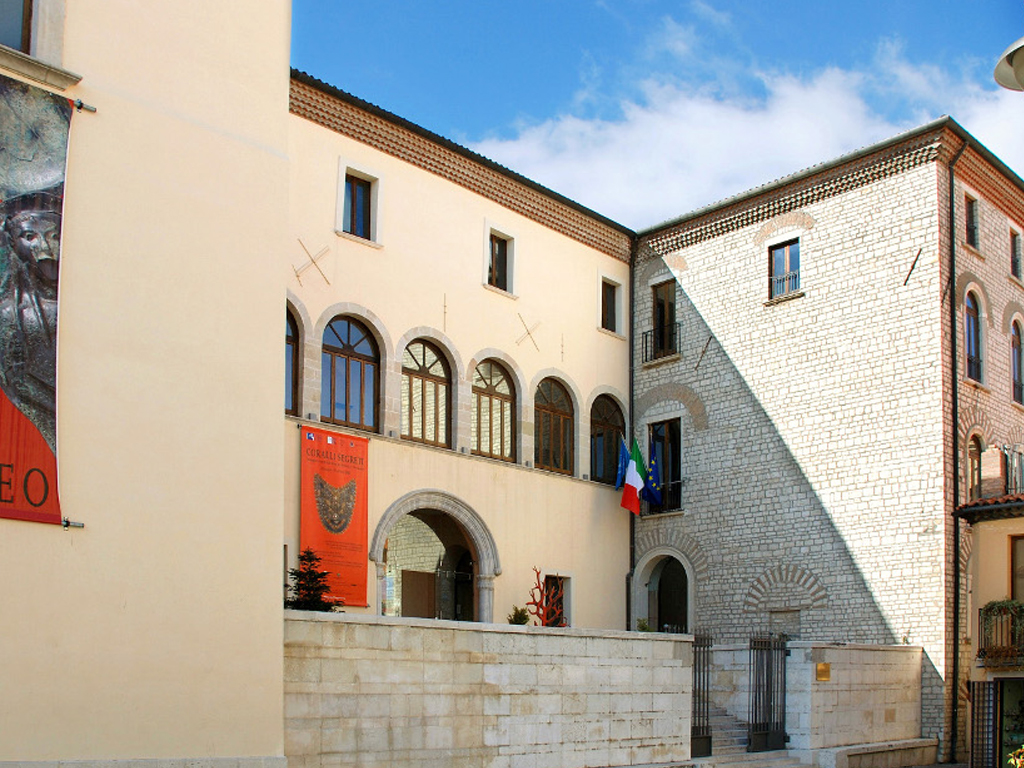
Built between the end of the 15th and the beginning of the 16th century in the area previously occupied by the Convent of the Celestines, it was first the residence of the Guevara, feudal lords of Potenza, then of the Loffredo counts, after the transformation of the castle into a hospital. At the beginning of the 19th century, the palace housed the Superintendence of Basilicata; around 1825 it became the seat of the 'Real Collegio', established by decree of Louis Bonaparte for the higher education of young people of the Province of Basilicata. In 1850 a decree of King Ferdinand II entrusted the College to the Jesuits, who managed it until 1860. After the Unification of Italy, the Institute was called 'Real Liceo' and named first to Salvator Rosa, then to Luigi La Vista and finally to Quintus Horatius Flaccus. Even in the 20th century, Palazzo Loffredo has hosted the Gesualdo da Venosa music conservatory and the Salvator Rosa national boarding school.
Over the centuries, the Palace has undergone numerous restoration and consolidation interventions which, with extensions and elevations, have transformed the original structure. The main facade is articulated around a courtyard enclosed by the two lateral wings of the building. The large entrance portal with a round arch precedes a second smaller architraved portal. Above the portal opens a loggia with six arches with smooth stone frames.
The building has a good distribution of rooms on an internal courtyard; the vertical connection is ensured by a stone staircase, which develops in the right wing. The second floor, which is accessed through an internal staircase in the right wing of the building, opens onto the courtyard with a windowed loggia.
Palazzo Loffredo currently houses the Superintendence for Archaeological Heritage of Basilicata, the 'Dinu Adamesteanu' national archaeological museum and the civic gallery where important cultural events take place.