


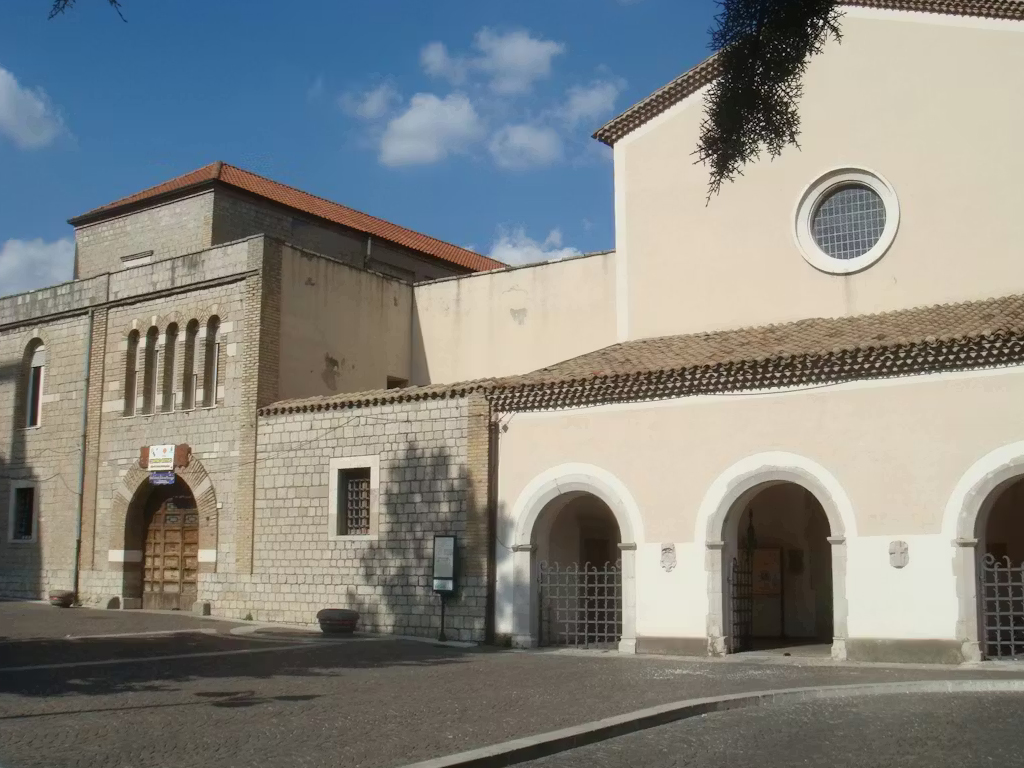
Around the origin of the church of the Holy Sepulcher built in the Potenza hamlet located at the intersection of the ancient Roman roads Appia Nova and Herculea, where according to hagiography the holy bishop Gerardo performed the miracle of the transmutation of water into wine or made it spring from a rock, multiple conjectures are intertwined. Today scholars converge in identifying it as a settlement of the Order of the Templars built in the early 12th century, perhaps on the initiative of the Count of Santasofia, lord of the Rivisco district, and passed around 1314 under the jurisdiction of Bishop Guglielmo who added the title of Santa Maria. Rebuilt in 1488, as attested by an epigraph walled in the narthex dating back to a restoration that occurred in 1652, on the initiative of the Count of Potenza Antonio de Guevara and entrusted to the Observant Franciscan friars, the valuable building presents the characteristic features of Catalan Gothic style in the facade and in the apse with flying buttresses.